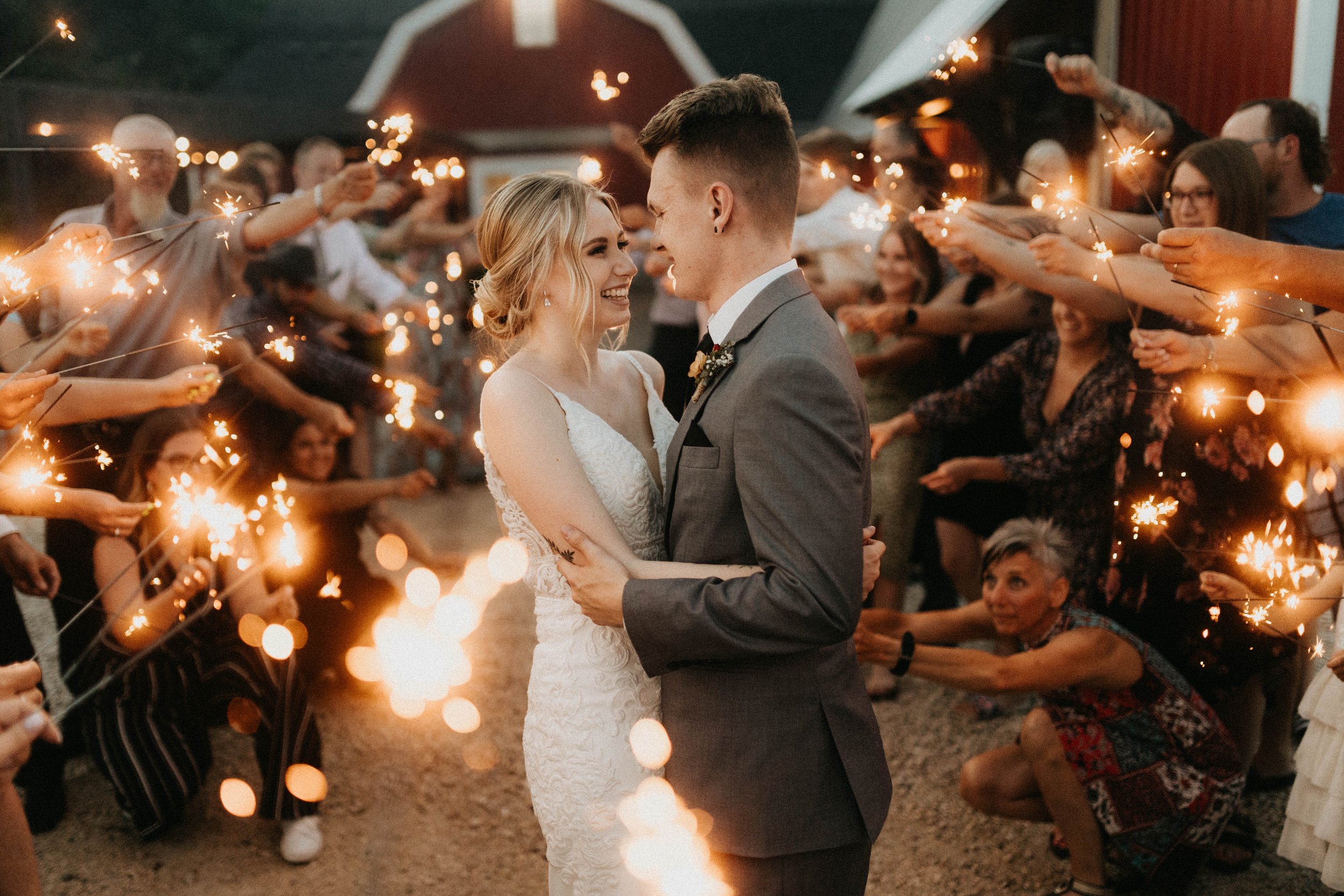
What’s the Difference Between Posed and Candid Wedding Photos?
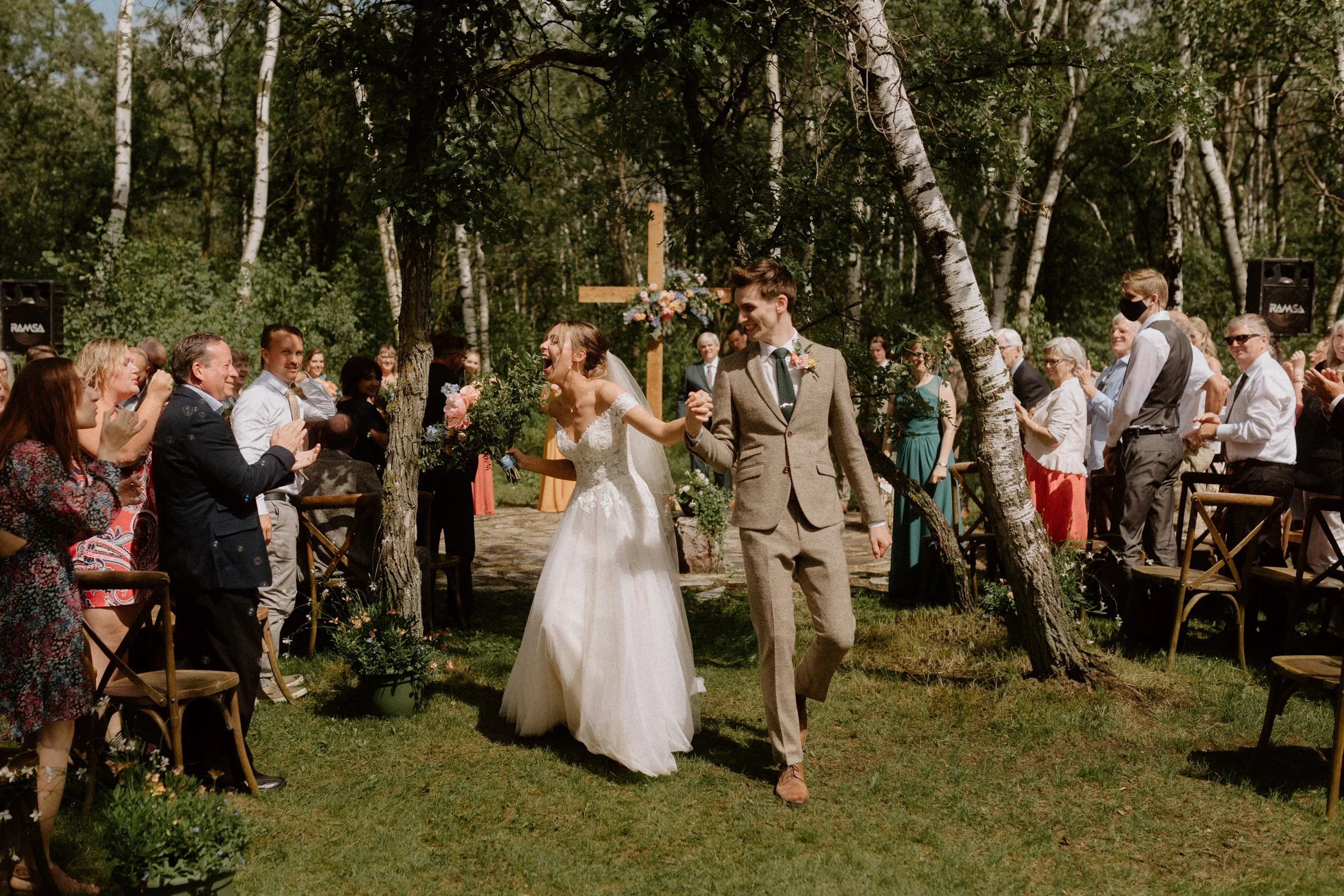
When couples reach out to me, one of the first things they usually say is some version of: "We don't want anything too posed."
I know what they mean. But I think what they're really saying is: we want our photos to feel like us.
That's the whole goal. And it's the thing that drives how I approach every wedding I shoot here in Winnipeg and beyond.
What I Actually Want for Your Photos
When you look back at your wedding photos ten or twenty years from now, I don't want you to think, "Wow, that was a great pose."
I want you to remember how that day felt.
The nerves before the ceremony. The moment you saw each other. The laughter during speeches. The chaos on the dance floor at the end of the night. The small, quiet moments between all the big ones.
That's what story-driven photography is really about. Not just documenting what happened, but capturing how it felt to be there.
Posed Photos Have a Place, and I Take Them Seriously
I want to be honest here: not every photo from your wedding day is going to be a candid moment. And that's fine.
Family formals, wedding party photos, and some parts of your couples session will involve a bit of direction. Those photos matter. They're often the first ones that get shared, printed, framed, put on the fridge. A lot of families hold onto those for a long time.
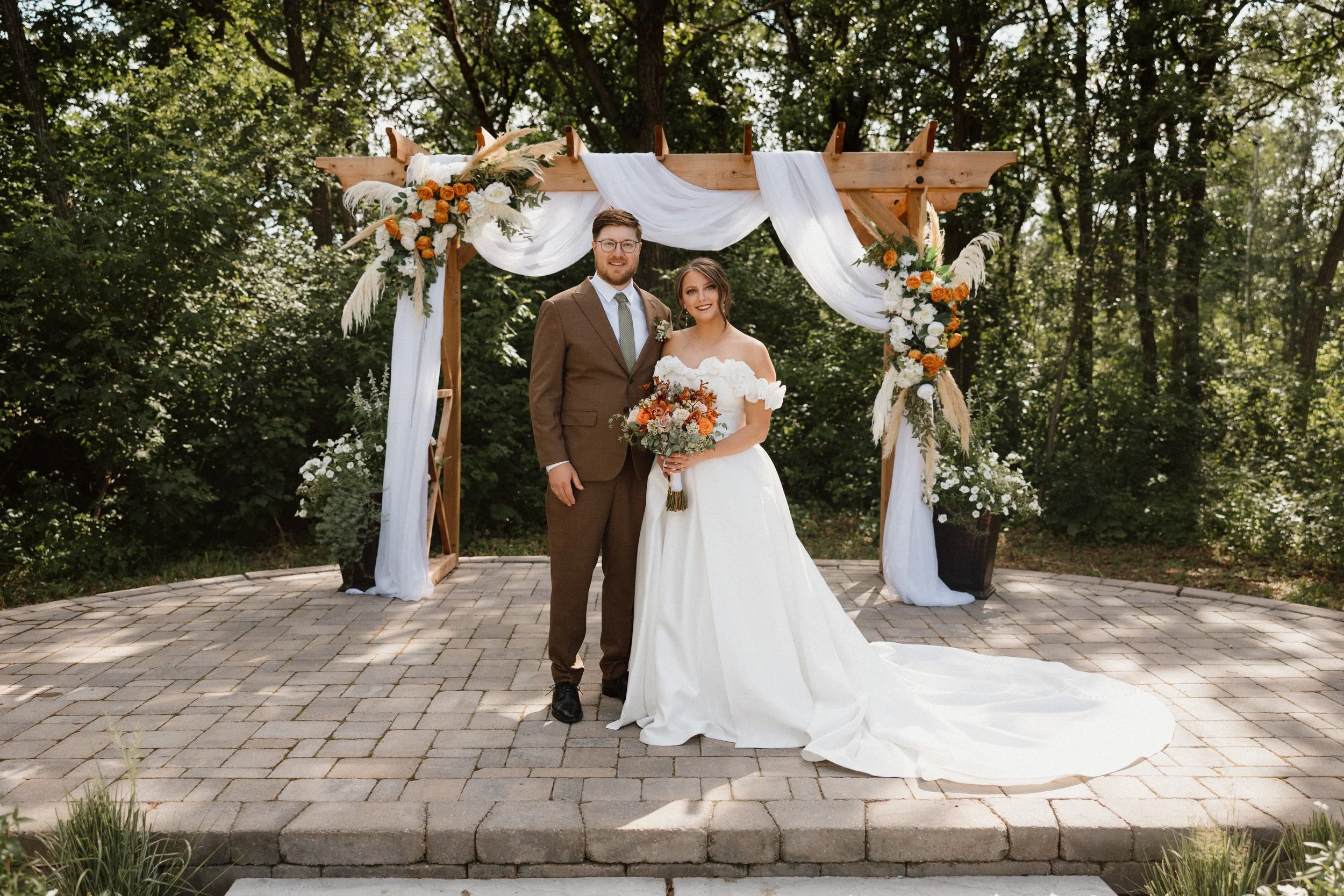
So yes, I take extra care with them. Good light, everyone looking their best, done efficiently so nobody's standing around waiting. I just don't want those to be the only photos you walk away with, and I definitely don't want your whole day to feel like a photo shoot.
What Documentary Wedding Photography Actually Looks Like
Most of your wedding day, I'm not directing anything.
Getting ready, the ceremony, cocktail hour, the reception, the dances. All of that unfolds on its own and I move with it. I'm usually close, often with a wide angle lens, right in the middle of what's happening rather than observing from a distance.
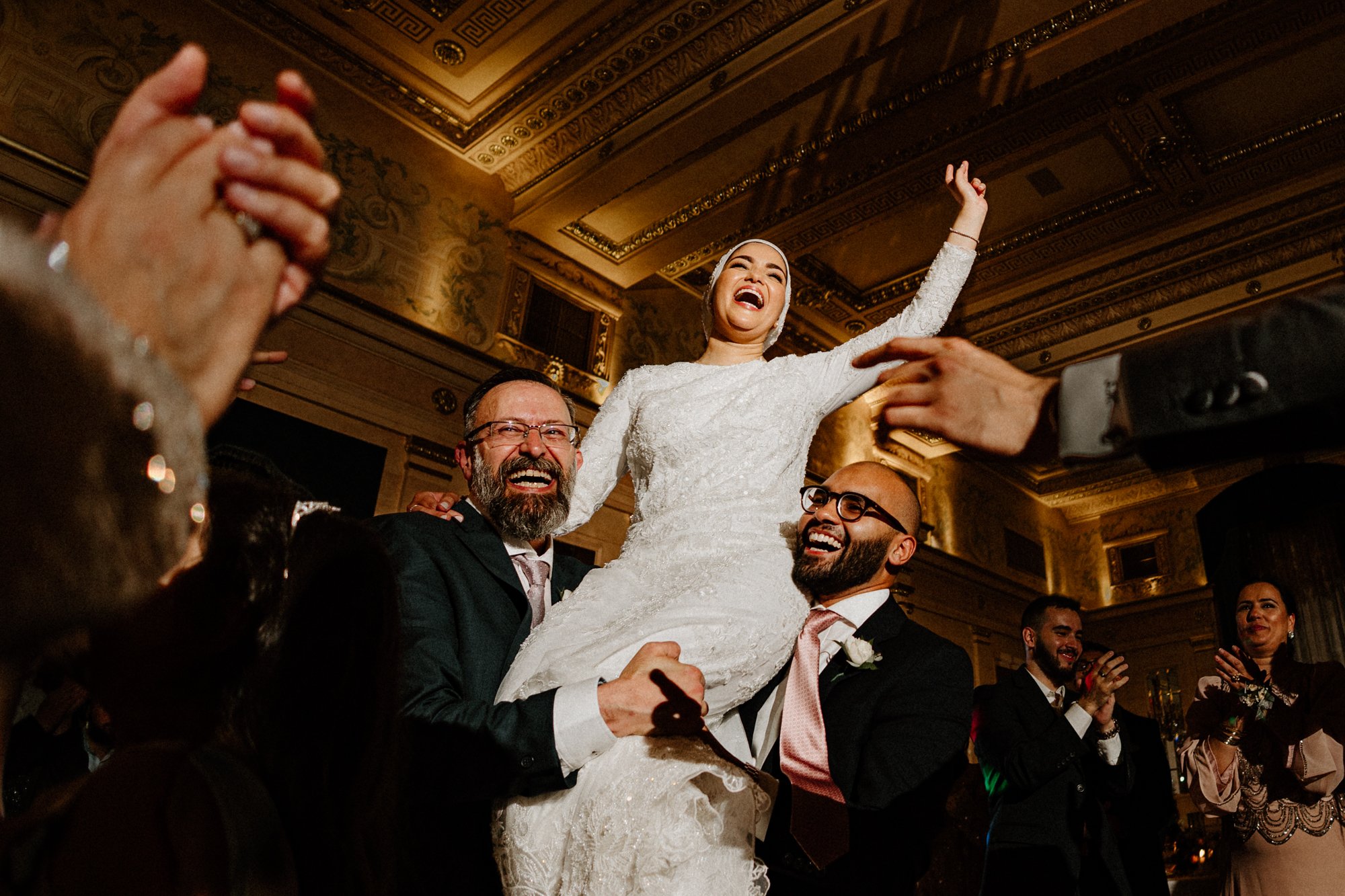
I also give myself permission to get creative when the moment calls for it. At one wedding, a traditional circle formed around the couple and I was completely surrounded, couldn't move an inch. So I flipped my screen out, raised the camera above the crowd and shot wide. The photo captured the entire energy of that moment in a way I never could have planned for.
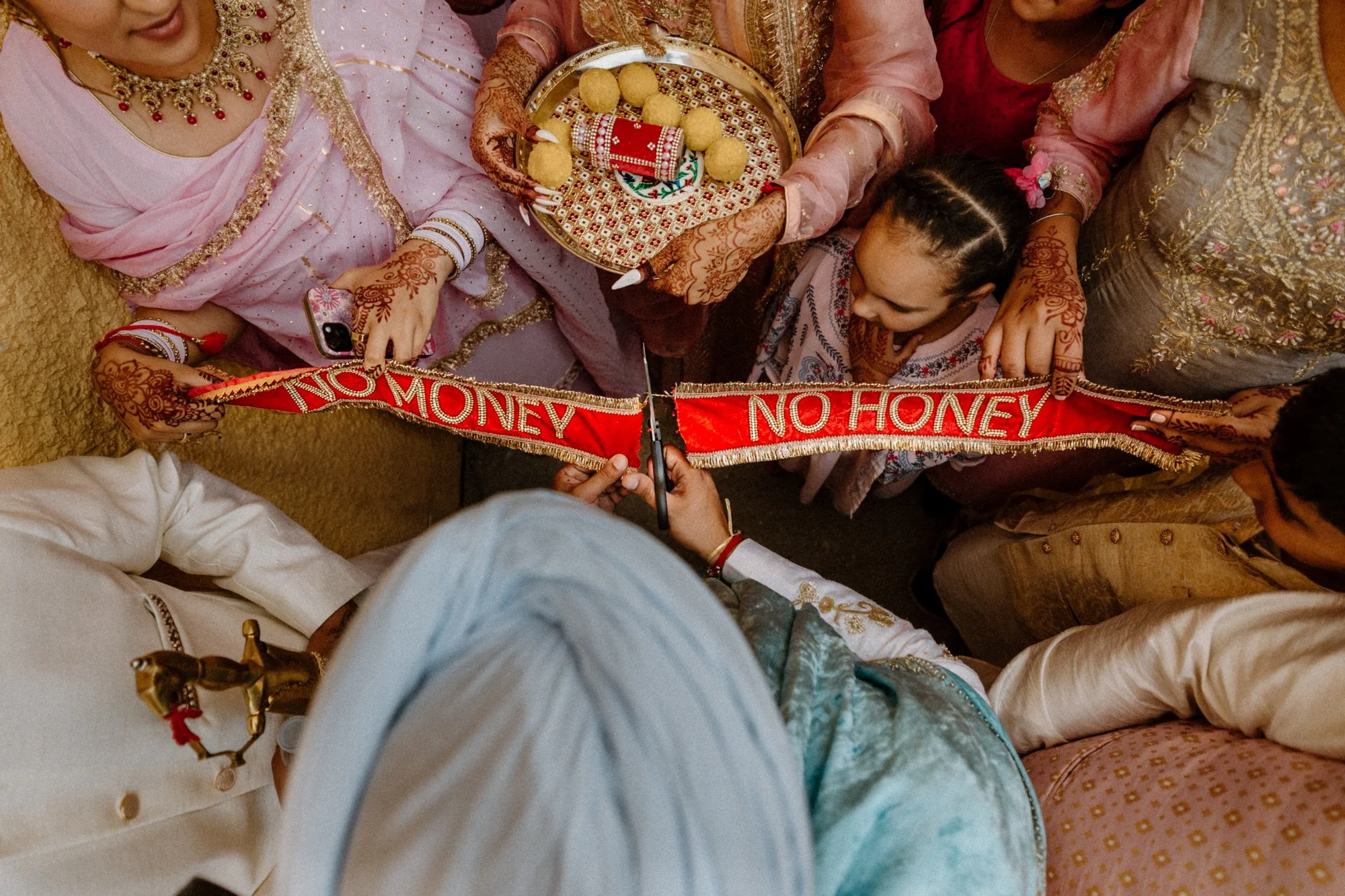
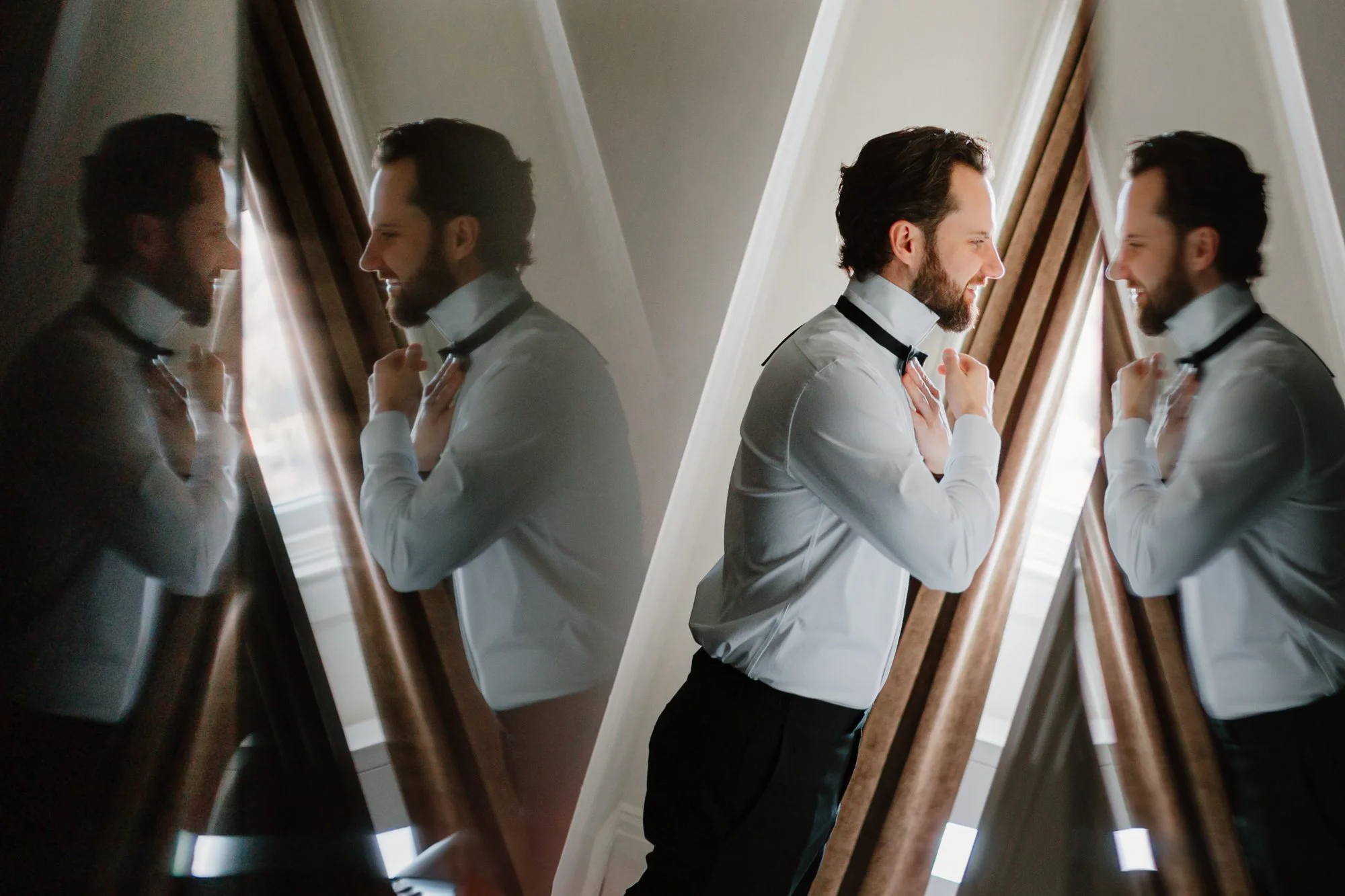
That's what I mean by documentary photography. You're not waiting for the moment to come to you. You're already in it.
"Directed" Is Different From "Posed"
During your couples session, I'm mostly following you, not posing you.
But there are moments where a small nudge helps. If you're standing together and your hands feel awkward, I'll give you something to do without making a big deal of it. If the light is better ten feet to the left, I'll say so. If something looks uncomfortable, I'll adjust it quietly without drawing attention to it.
The goal is always the same: create space for something real to happen, then be ready when it does.
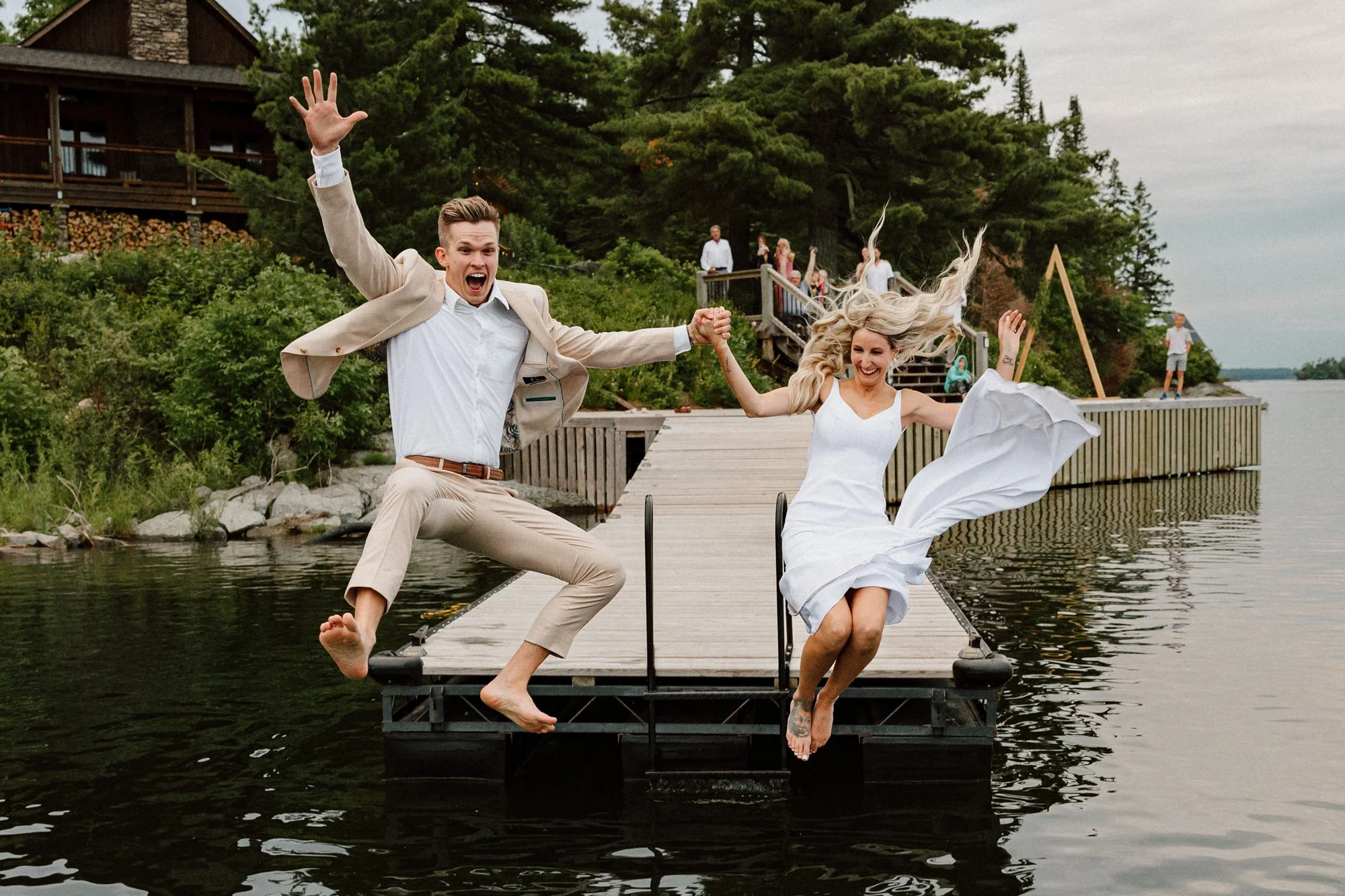
One of my favourite examples of this is a dock jump at a cabin wedding. The couple wanted me to shoot it from behind them. I suggested the front instead, because what I could already see in my head was their faces mid-air, the pure reaction of that moment, and behind them, their whole group watching and cheering them on, with the cabin and the island they had specifically chosen for their wedding day framing the whole thing. That setting meant something. I wanted it in the photo. All I changed was where I was standing, and it turned a fun moment into one of the strongest photos from that day.
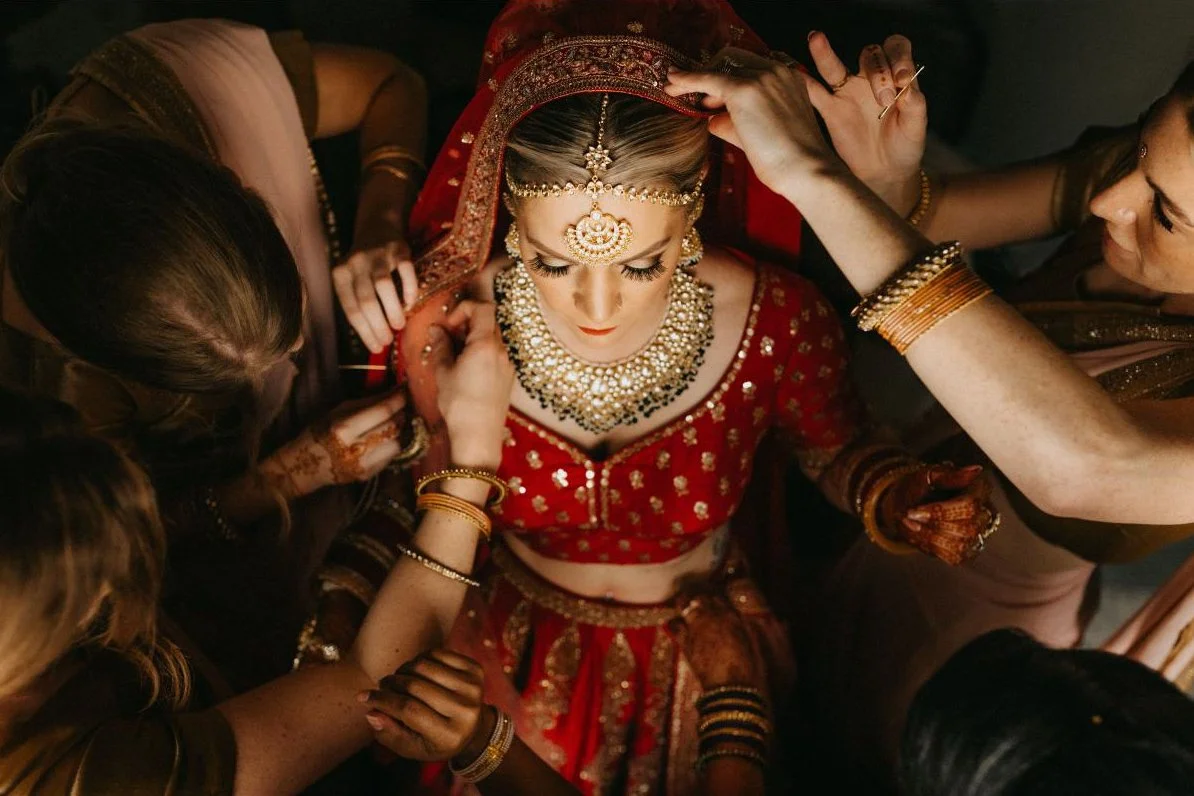
Another one: a bride and her bridesmaids were putting on bangles and headpieces before the ceremony. I noticed the light near the window was beautiful and asked them to move a few feet closer to it. That was the only direction I gave. Everything else happened on its own.
Why Most People Feel Awkward in Front of a Camera
Almost every couple I work with tells me they're worried about looking stiff or unnatural. Most people aren't used to being photographed, and the idea of posing all day sounds exhausting.
Here's what I've found: when you're not being stopped and repositioned every few minutes, that feeling mostly goes away.
Because I'm not constantly interrupting your day to set up shots, most couples tell me afterward that it felt way easier than they expected. The camera just becomes part of the day.
The engagement session helps a lot with this too. Not just for the photos, but because it gives you a chance to hear my voice, hear the shutter, and get used to the camera being close. By the time your wedding day comes, I'm not a stranger with a lens. That changes things.
The Risk, and the Reward
I'll be upfront about something: documentary photography is high risk.
Moments happen once. You can't recreate them. If I miss something, it's gone.
But when those moments do come together, when something real happens right in front of you and you're exactly where you need to be, the reward is so much higher than anything staged could ever be.
Those are the photos that bring you back. Not just to what you looked like on your wedding day, but to how it actually felt to be there.
That's what I'm always chasing. And it's why couples working with a Winnipeg wedding photographer focused on story-driven work keep telling me their gallery felt more like reliving their day than just looking at pictures.